
Posted by Dr Hannah Bunting
23 April 2026Adam Gray gives the second part of his preview on Greater Manchester, the competitive west where party dominance is more fluid.
2026 Local elections preview: Greater Manchester (part two)
By Adam Gray
Having previewed the City of Manchester and the four boroughs to its east in part one, this blog looks at the four boroughs and one city (Salford) to the west. As the more competitive side of the county, several parties are vulnerable to challengers.
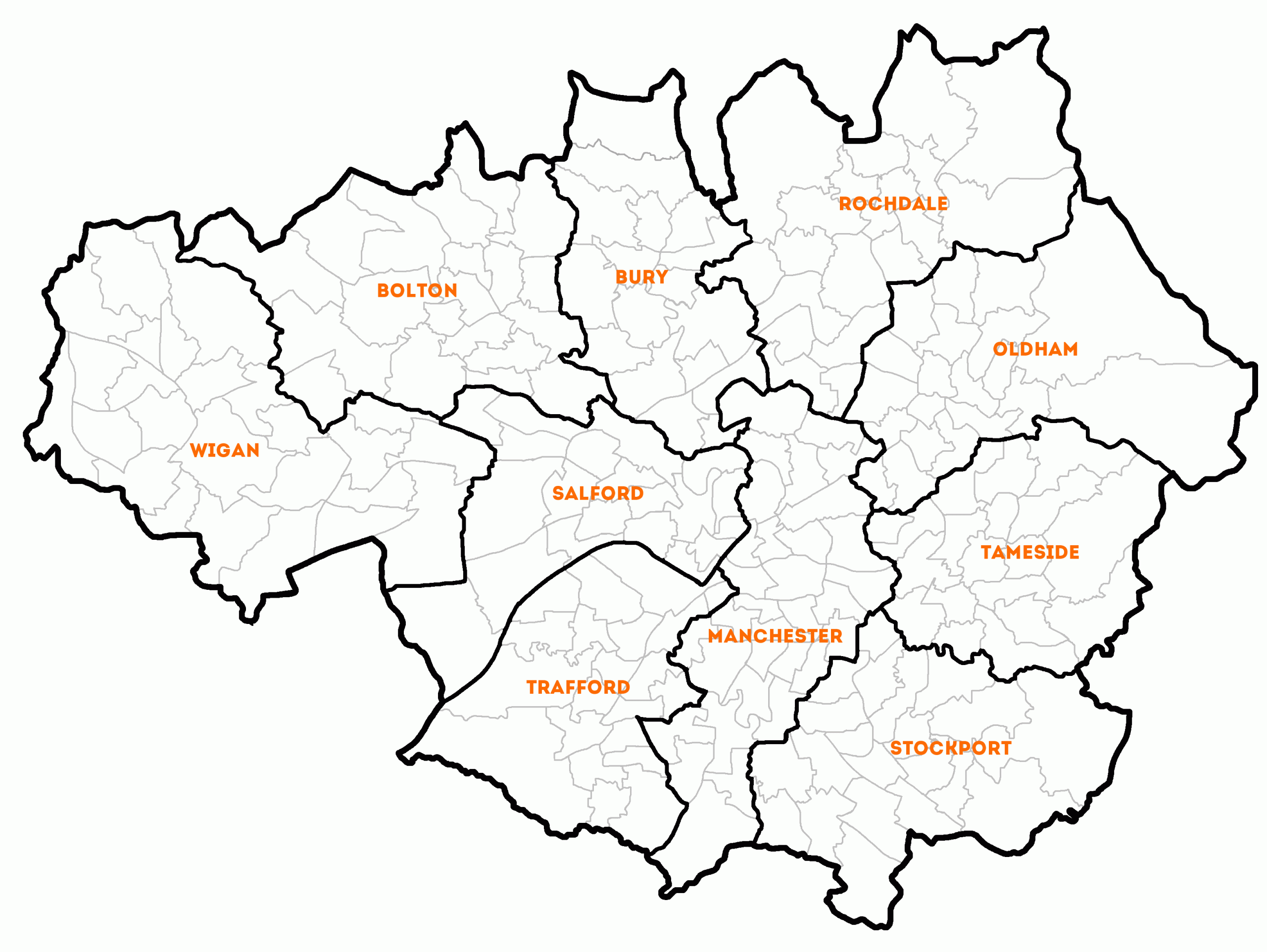
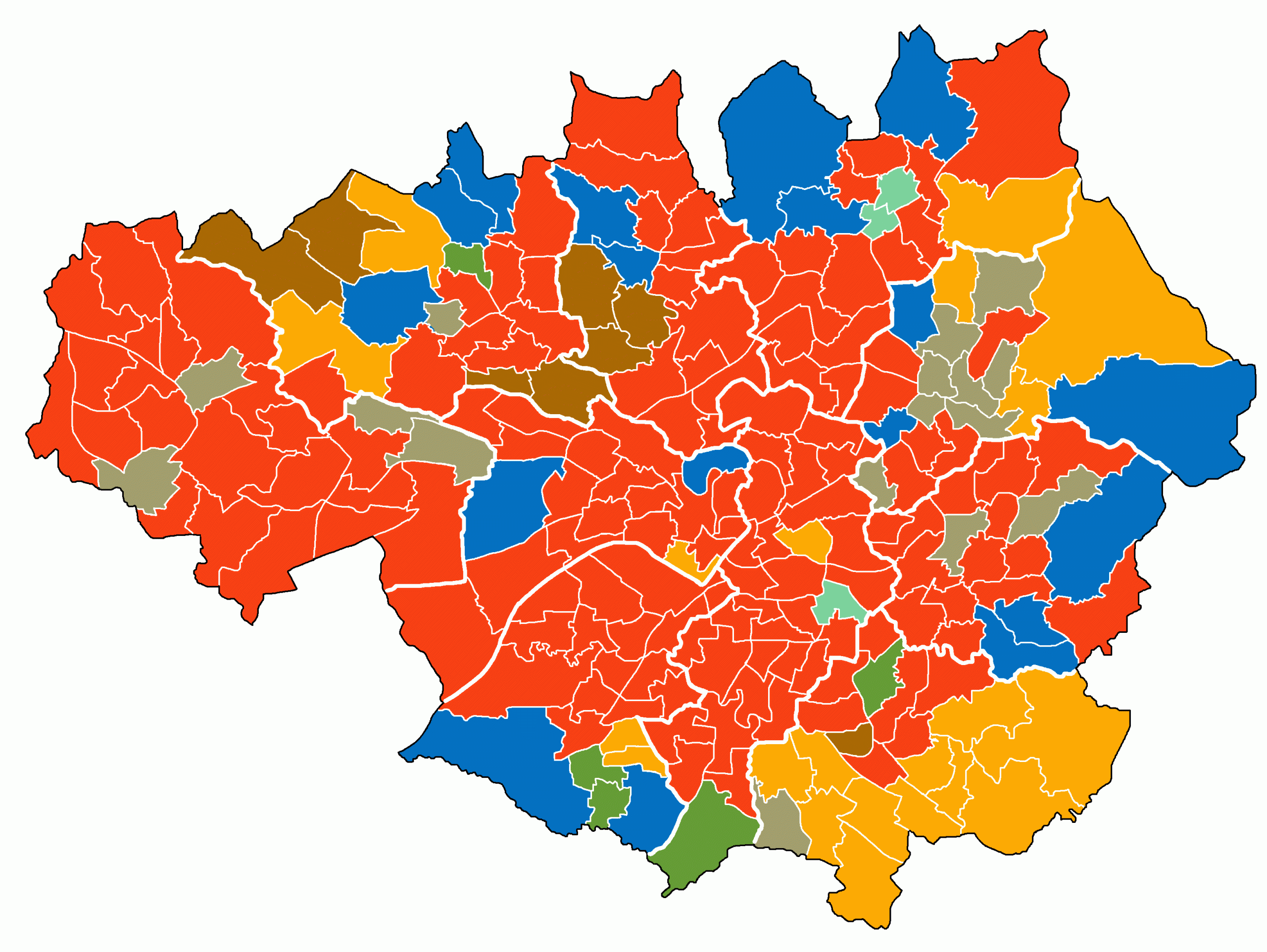
Labour lost their majority in Bolton in 2019 and are five seats short of regaining it. Whilst that sounds like few, there aren’t enough winnable seats to make it realistically possible, even if they were more popular than they are now. Labour has already lost wards to the localist “First” party in Horwich, Kearsley and Farnsworth, and in 2024 also lost the town centre ward to Greens and Rumworth to a Gaza Independent. Eight Labour seats are up this year and at least six are vulnerable; both to the parties that won two years ago and Reform. That means four parties are their challengers. The Conservatives, defending six seats, are as vulnerable as Labour to Reform; they might hold three but could lose all six.

Proportional map of Bolton
Note: Ringed seats are those up for election this year; brown represents the assorted “First” parties, olive is Independent
Labour is in a stronger position in Bury, where they have a majority of fourteen. But the same problems beset them: already they’ve lost seats in the outlying town of Radcliffe to “First” and this is even more of a swing-prone borough than Bolton. Labour would have to do catastrophically to lose power – they’d need to lose eight of the ten they’re defending. Besses, St Mary’s, Sedgeley and Unsworth all look safe on paper but Reform haven’t yet stood here. The Conservatives lost loads of ground in the last rounds of the election cycle and only defend three seats. In normal mid-term opposition times they’d expect to recover rapidly but, as in Bolton, they could lose all three.
Wigan vies with Salford and Manchester as Labour’s very safest council in Greater Manchester – but probably not this year. This will be the epicentre of Reform’s challenge to Labour, and the Britain Votes Now local elections model forecasts a near clean-sweep for Farage’s party. Labour’s majority in Wigan is 49, so even if they were to lose all 21 seats they’re defending they’ll keep control. Such a calamity would be unprecedented and Labour should win something, somewhere. But soft-left Culture Secretary Lisa Nandy is MP for Wigan and she’ll have to grapple with the key Labour dilemma of whether to indulge the party’s inclination to move left to hold onto progressive voters or focus on regaining support lost to Reform in heartland seats like hers.
Salford spans the area between Wigan and Manchester north of the ship canal. It contains some of the demographics that make Manchester so Labour, though it’s far whiter, and that gives Reform some opportunities at the “Wigan” end, around the outlying towns of Walkden, Worsley, Irlam and Swinton – maybe Eccles too. But the Salford-Manchester end is of a different character and Labour’s been bolstered by the creation of the BBC Media Village in the Salford docks which is helping bring a new, middle class metropolitan demographic to the city. Salford is the only GM borough with a directly-elected mayor, though that position is not up for election this year. Labour’s council majority is 32 with only 15 Labour seats up for election, so their risk is capped even in a disaster, and Salford should be sufficiently different to Wigan that it won’t quite be that.
Although, just yesterday on 22 April Reform narrowly gained a seat in Salford’s Barton and Winton ward from Labour. Labour’s vote more than halved: down 35%. If that is happening in one of the Mets in which we expect Labour to be more resilient in a fortnight’s time then things will be very, very, very bad indeed. We would be looking at Labour’s worst local election result since 1973.
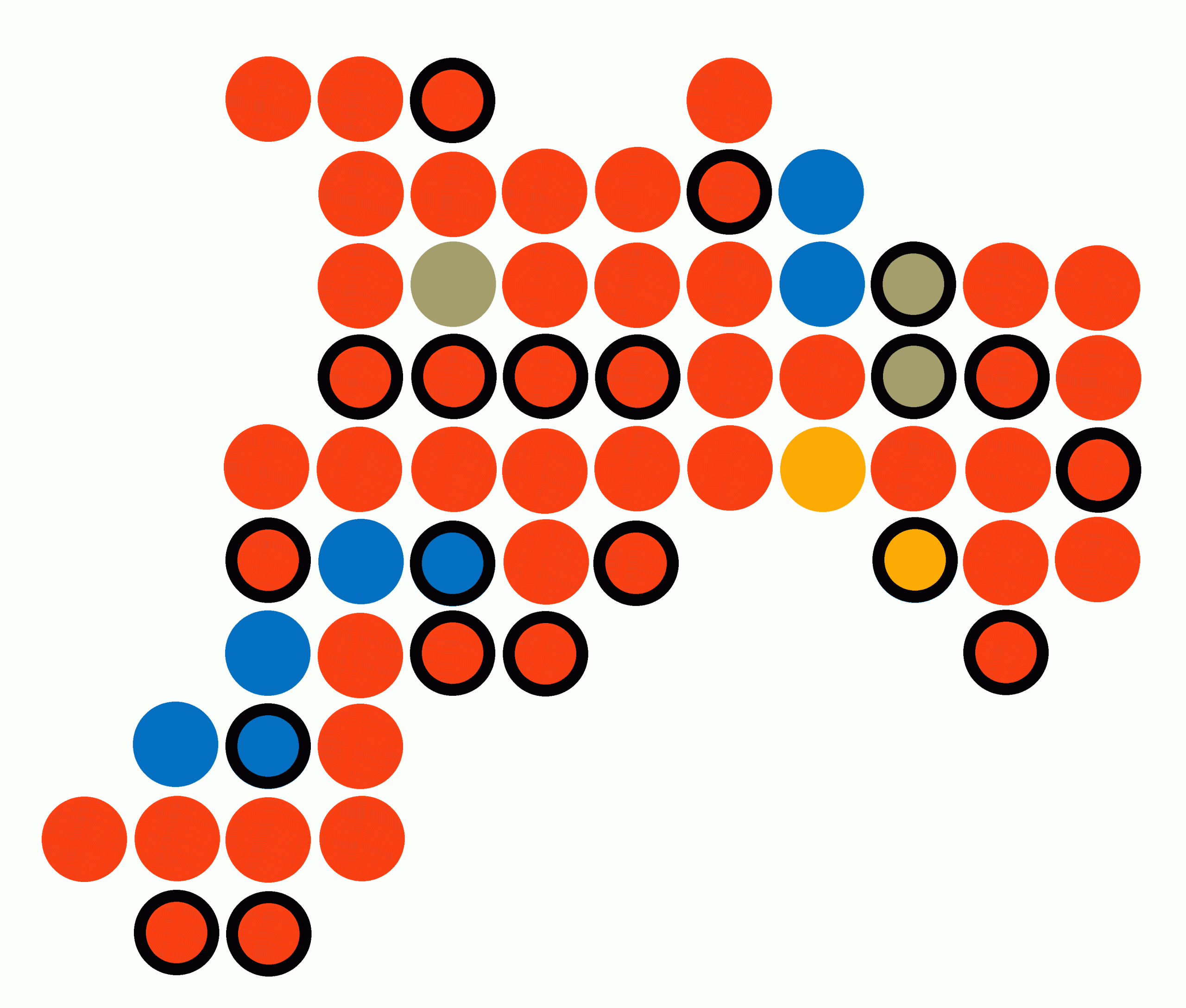
Proportional map of Salford
The last of the boroughs west of Manchester is Trafford. Trafford was one of the few Mets the Conservatives could win, even though it stretches up to Stretford and Old Trafford. These are not affluent areas, meaning Labour has always had strong representation even when they lost, but they gradually expanded their battleground, moving into “middle Manchester” suburbs like Davyhulme and Flixton. Winning those sorts of areas, even if only when the Conservatives were unpopular, as in the late 1990s, was enough to tip Trafford to Labour for a while, and then more comfortably as this Remain-voting borough turned against Boris Johnson’s aggressively Leave Conservatives.
Trafford is also interesting because the Green Party assailed the Conservatives in the affluent south, winning Altrincham and Hale. Hannah Spencer, the new Green MP for Gorton and Denton, is a councillor for Hale and her seat is up this year, though she now won’t be defending it. Are the sorts of affluent, liberal and environmentally-conscious Conservative voters who switched to the Greens to kick the Tories going to stay with this much more left-wing incarnation of the party since Zack Polanski won? We’ll have to wait for polling day to find out, but the omens aren’t great for the Greens.
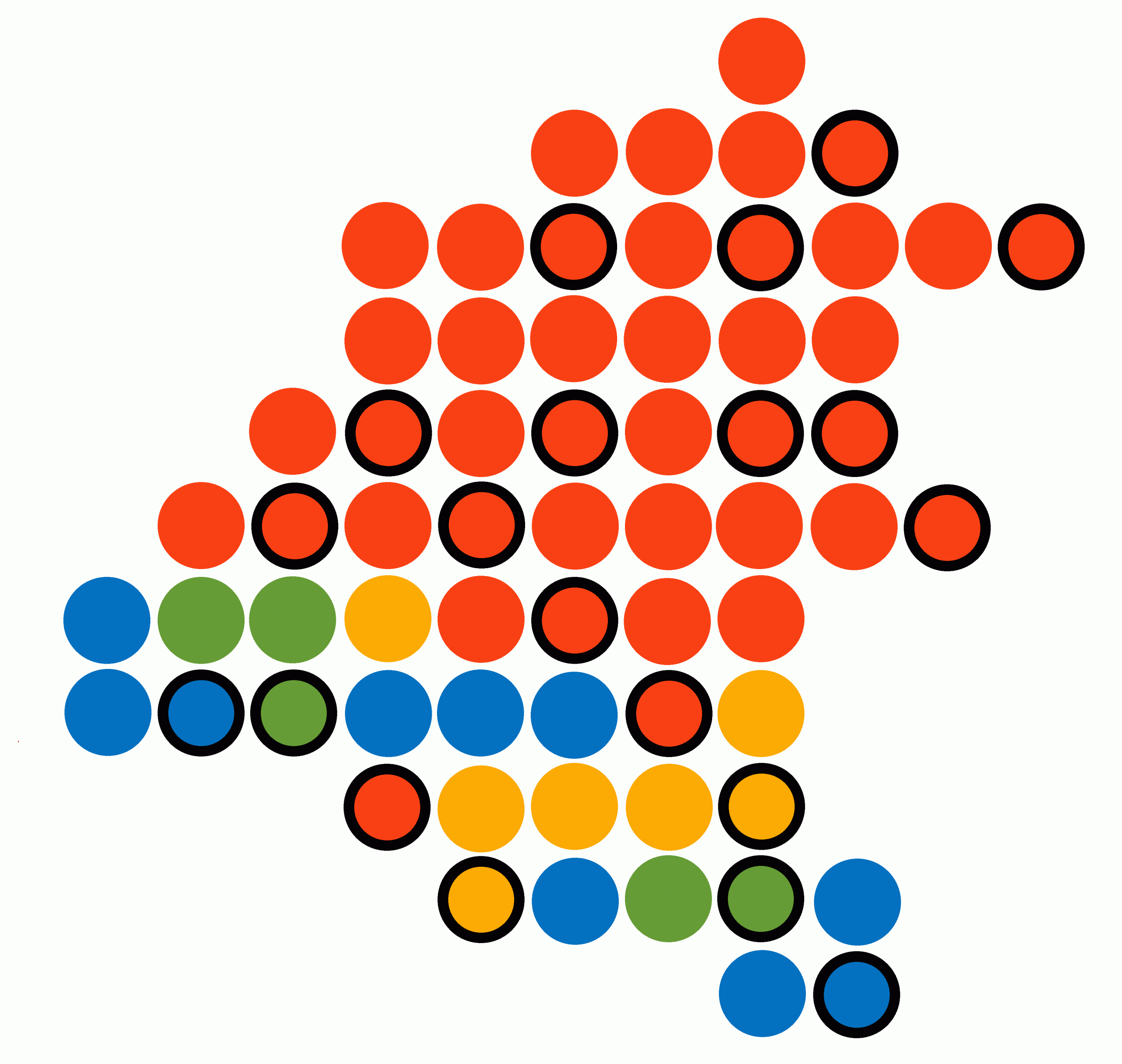
Proportional map of Trafford
Last autumn the Tories regained one of the Trafford Hale seats in a by-election, just a few weeks after regaining a seat they lost to Labour in Broadheath, also at the Altrincham end of the borough. These were two stark Tory gains in a year where the Conservatives fared very poorly in council by-elections.
Equally, it’s possible that if the Greens struggle to hold off the Conservatives in the south they might offset them – and more besides – in the Labour north. There are more Labour than Tory wards and they may well be as susceptible to the sort of pitch Hannah Spencer made in Gorton, with some of the same demographics.
If those by-election wins are reflected in May’s results, the Conservatives will start closing an electoral chasm that opened in the Sunak years. But that chasm is vast, exacerbated in 2023 by all-out elections at a terrible point in time for the Tories. Labour’s majority is a comfortable 22, 35 over the Conservatives, so there’s no chance of them regaining Trafford in 2026 – if they ever can. Labour could, in theory, lose power in Trafford: they are defending 13 seats: but they’d have to lose them all, and that is highly unlikely.
The Conservatives have relatively easy targets in Broadheath, Manor and that Green defence of Hale. Then they’ll look to Brooklands, and then it’s a big gap to regaining Ashton-upon-Mersey, Davyhulme, Flixton and the other Green ward of Altrincham. Those may be too big a leap given that the party isn’t exactly polling well nationally. Then again, with all the parties polling lowly vote shares, strange results are possible in a way they usually are not.
 View our parent website (electionscentre.co.uk)