

Posted by Dr Hannah Bunting
10 April 2026Adam Gray gives his preview of Tyne and Wear, posing the question — are our friends in the north tiring of Labour?
2026 Local elections preview: Tyne and Wear
By Adam Gray
Four of the five Tyne and Wear councils – Gateshead, Newcastle, South Tyneside and Sunderland – have all-out elections this year following boundary changes. Labour were already in a spot of bother in the north-east and this multiplies that risk. This year will test whether our friends in the north are tiring of Labour.
It’s possible that Labour will emerge from these elections controlling just the remaining fifth council, North Tyneside which they can’t lose even if they do badly, though they may also hang onto Gateshead. Had the others not been all-out Labour would have been guaranteed continuing control of three.
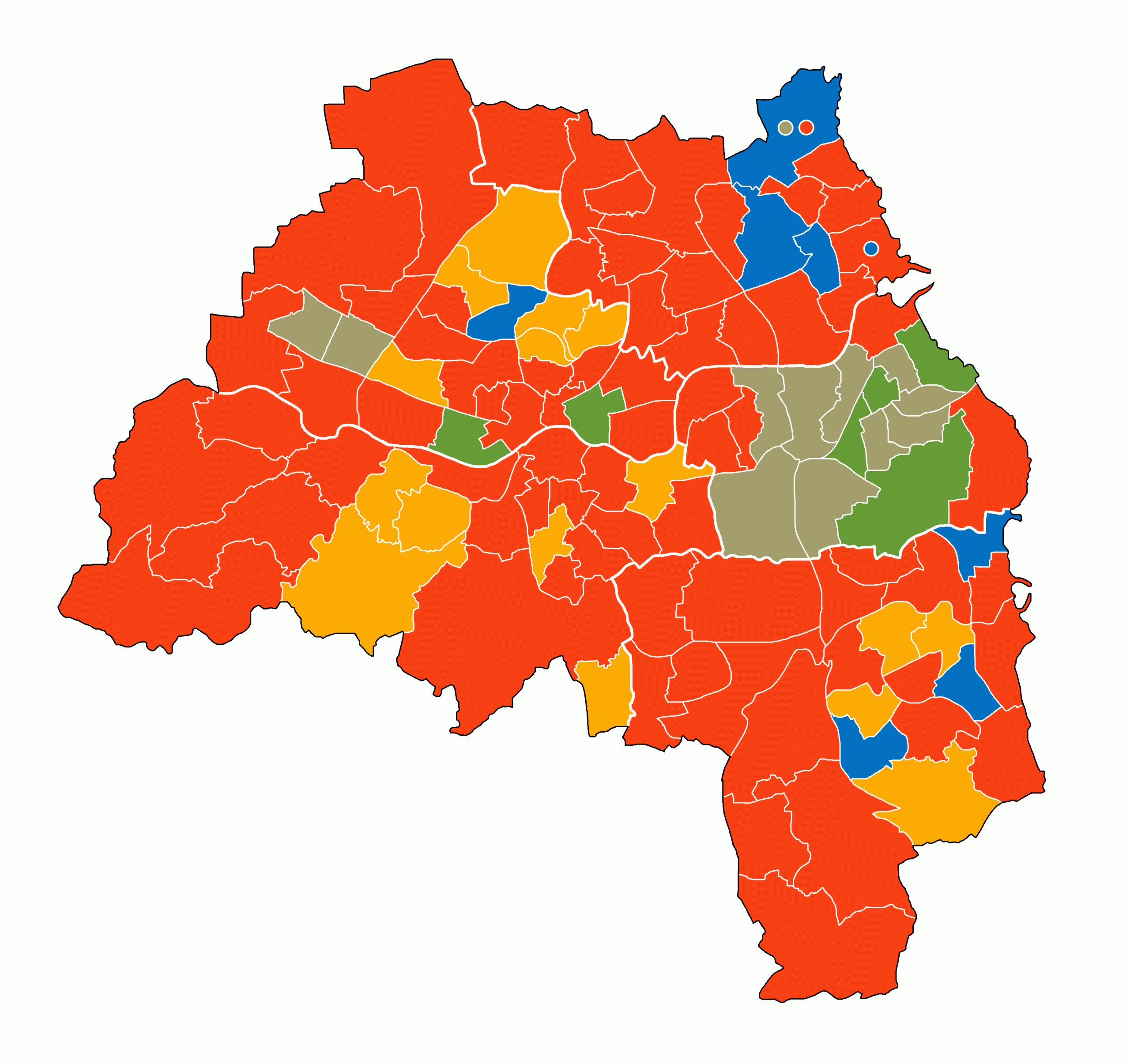
Tyne and Wear wards by winning parties after the 2024 local elections
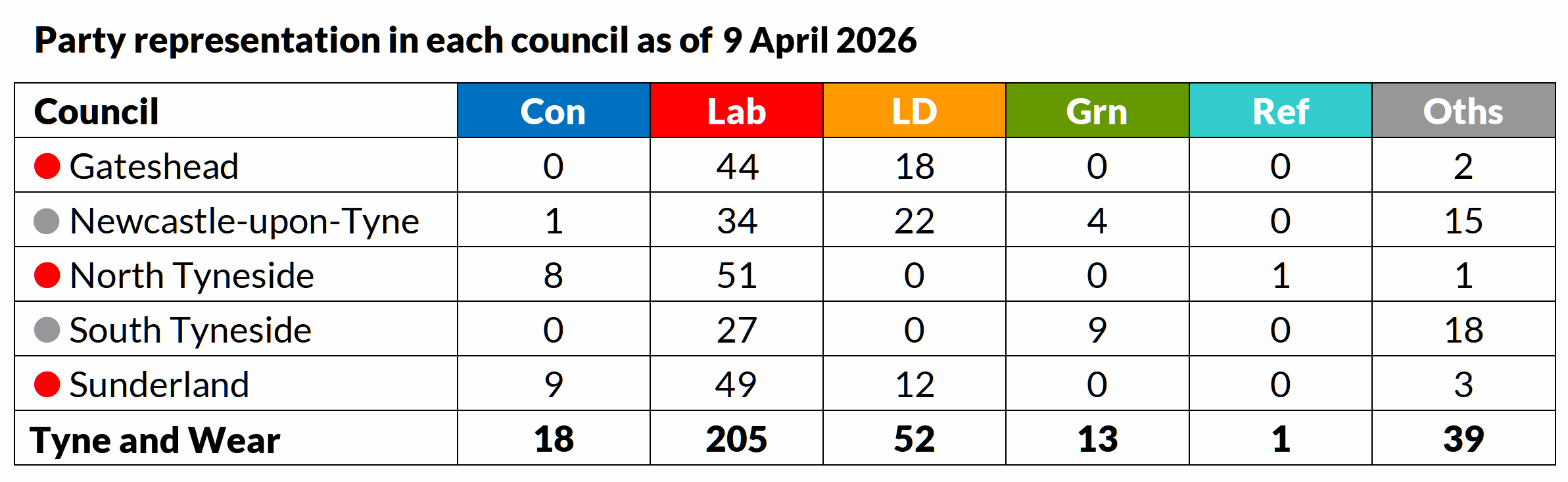
Labour had never lost South Tyneside – which includes Jarrow, steeped in the history of England’s working class – until the deputy mayor defected to Independent in June last year. Labour now holds exactly half the seats.
But they had an atrocious result here in May 2024, before the general election and before the party became unpopular in government. In those local elections Labour held just four seats (out of eighteen), with Greens taking four and Independents ten. Labour’s majority on the council fell from 22 to just 2. That’s why they have only a slight (and I’m being generous) chance of regaining power: they are far more likely to lose more seats than regain any.
Moving into Wearside, Sunderland has a fairly large Labour majority, again under threat mainly from Reform UK. Sunderland includes the city itself, the new town of Washington and some outlying former pit villages to the south and south-west like Houghton, Hetton and Ryhope.
Anyone who recalls the EU referendum may remember the much larger than forecast vote for Leave from Sunderland. Following the referendum, the Conservatives and Liberal Democrats started making headway on the council, slashing Labour’s majority from 59 in 2016 to just 9 by 2022. There were reasons for that beyond the referendum: people were tired of a council that never changed from Labour control, unresponsive and out of touch. But Labour has clawed back some ground – mostly from the Conservatives – since 2022, more due to that party’s deep unpopularity than a Labour renaissance.
Tyne and Wear is a tale of two cities: Sunderland and Newcastle. They are as different as London and Paris were in Charles Dickens’ version of the story, though they both have lengthy and deep Labour traditions.
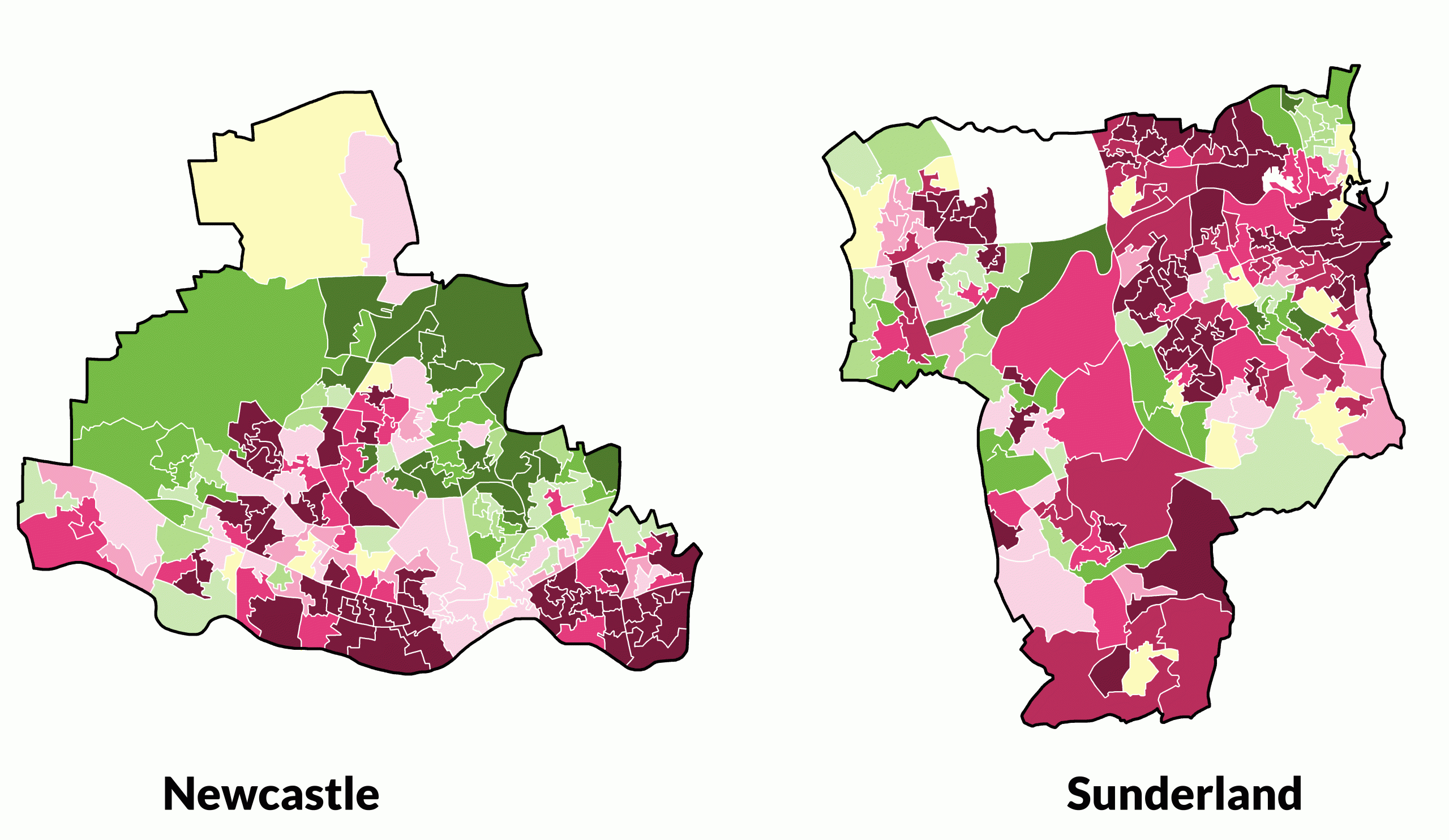
Index of deprivation maps for Newcastle and Sunderland
Note: The deeper the purples the poorer; the deeper the greens the more affluent
While Sunderland voted 61-39 to Leave the EU, Newcastle voted 51-49 to Remain. That is not some freak divergence: it was because Newcastle is a younger city; it is (in parts) more affluent than Sunderland with a large student population and a belt of middle-class suburbia north of Town Moor. That also has led to a more diverse political field in Newcastle, compared to Sunderland.
Labour has never won near monopolies in Newcastle, as it has in Sunderland: the Conservatives and then the Liberal Democrats have held large blocs of councillors. Labour lost power to the Lib Dems from 2004 to 2011 but, even after regaining the council, this Lib Dem councillor group remained quite large, dominating the north of the city around Gosforth. In more recent years an assortment of Independents have won seats, west of the A1 and that, plus a Lib Dem renaissance, has helped drag the council back to no overall control again.
Newcastle only recently had its ward boundaries redrawn for the 2018 elections but the council so messed up its population forecasts that, by 2024, the wards had such widely divergent electorates that the boundary commission had to overhaul them.
There is far less of a Reform threat in Newcastle than Sunderland. They have a few prospects in the outer west of the borough, and perhaps in much less affluent Byker and Walker, but Reform won’t be challenging for control of the council.
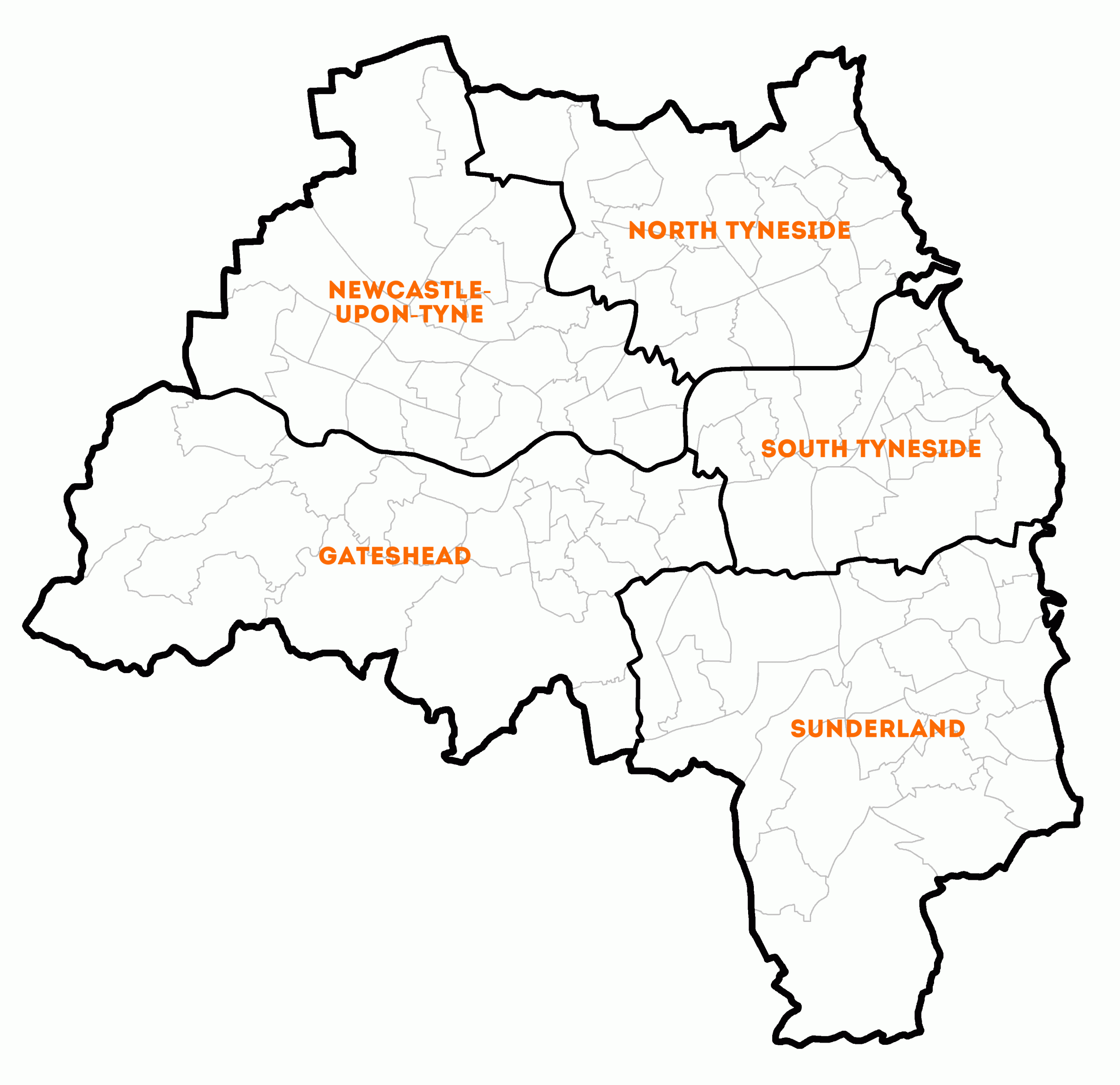
Tyne and Wear councils map
The same is not true of Gateshead, on the opposite bank. Gateshead is a borough of two halves: the urban, densely-populated town itself and then a large rural extent running west almost as far as Prudhoe. This is another always-Labour council that may become a not-anymore Labour council on May 8th. The Lib Dems have clumps of support in Gateshead: a couple of wards in the town, and then a cluster of outlying wards around Wickham. But you only have to look at the landslide wins Reform achieved in neighbouring Durham (and especially North Durham and Consett) last year to appreciate the threat they pose here.
Finally, North Tyneside. This is the only council with only a third of its seats up (its boundary review happened in 2024). It’s also the only Tyneside council with a directly-elected mayor, who was elected in the “fallow” year for council elections in this type of authority: 2025.
Reform came far closer than expected to winning the mayoralty of North Tyneside last year than expected, Labour holding on by just 444 votes. Had the Conservatives not abolished the supplementary vote system for electing mayors, Reform may actually have won on second preferences, as the Conservatives took a fairly impressive (given their wider performance) 20%.
That 20% vote for the Conservatives shows that there’s a still fairly deep seam of support for the party on the coastal side of the borough. They can usually win seats in Whitley Bay, Tynemouth and Monkseaton, though not consistently. Reform is more likely to do best along the ship-building neighbourhoods along the Tyne and inland in Killingworth. The Greens did well in the two Whitley Bay wards in 2024, but the Conservatives (somewhat bizarrely) didn’t contest Whitley Bay North – and surely will this time. It’s somewhat more likely that if these wards break with Labour it’ll be back towards the Conservatives.
Labour holds 63% of the council seats in Tyne and Wear right now, but if they hold anywhere approaching 50% of them on May 8th they’ll take that as a win. More realistic, retaining a third of the seats and keeping control of North Tyneside with a much reduced majority might be a middle range estimate of what they can hope for.
 View our parent website (electionscentre.co.uk)