
Posted by Dr Hannah Bunting
4 May 2026This is the year the Mets elect – Adam Gray explains why Labour was already struggling in these districts, even though they are usually their strongholds.
2026 Local elections: Why Labour are weaker even where they’re strongest
By Adam Gray
The Metropolitan districts, England’s great cities alongside London, have long been the core of Labour’s support. So irritated was Mrs Thatcher by the power exercised by the Greater London Council and the Metropolitan county councils – Greater Manchester, Merseyside, South Yorkshire, Tyne and Wear, West Midlands and West Yorkshire – a power founded on the massive populations they represented, that she abolished them early on in her government. But the individual city, metro and borough councils remained, and as Labour as ever.
Even if they are substantially more inclined to vote Labour than the rest of the country, the Mets are still barometers of public opinion. Typically when Labour is in opposition nationally, the party builds up huge majorities in the Mets. That was the case in the eighteen Thatcher and Major years up to 1997.
But something unusual happened during the Conservative government that ended in 2024. Labour went into the general election not unprecedentedly strong but unprecedentedly weak. Even before Labour began shedding votes as a result of decisions, mistakes or simply political entropy, they were at a far lower point in both seats held and votes won than they were in 1997.
This table shows precisely how much weaker:
Comparison of Labour seats and vote share in the last set of local elections before the 1997 and 2024 general elections
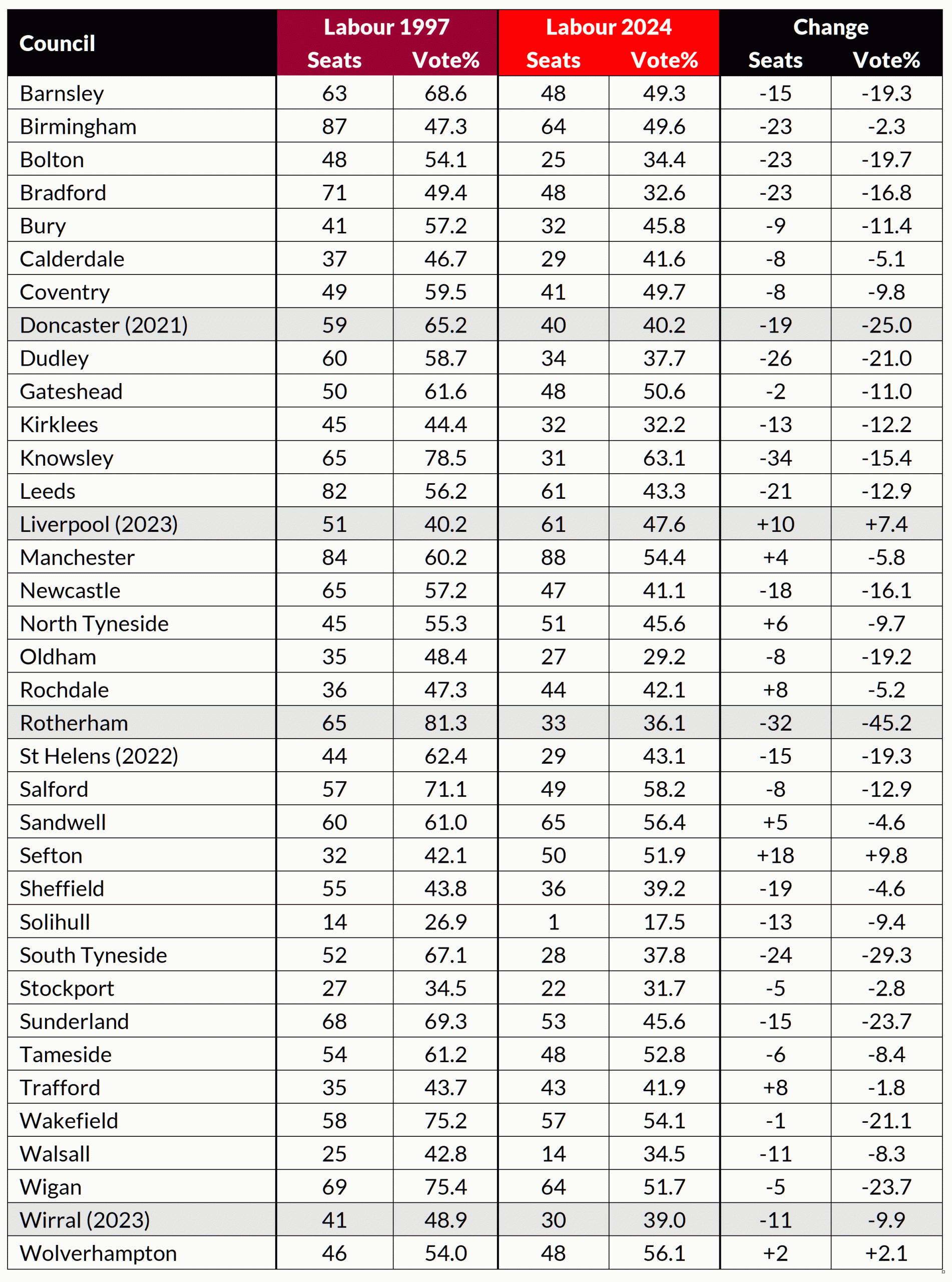
Note: Councils shaded grey are those that did not have elections in 2024 and aren’t up this year either; in which case the year in brackets was the most recent year they did have elections prior to the general election (and that year’s results are used). St Helens has elections this year and its last elections were 2022.
Part of the reason – but only part – was the EU referendum of 2016. The vast majority (28 of 36) of England’s Mets voted to leave the EU, sometimes by substantial margins and in direct opposition to the way Labour had been urging them to vote. It wasn’t the start of the rupture but the most visceral exposure of it, which led to the scores of Labour losses in the 2019 “get Brexit done” general election.
Voters have also found new parties to represent them, especially new local parties: modern day iterations of Ratepayers Associations. And 2024 saw the emergence of “Gaza Independents” who had a marked impact in councils like Kirklees and Oldham; George Galloway’s Workers Party gained seats in Manchester and Rochdale.
Labour was losing ground in different places for different reasons. There was the disgruntled Leave vote that was much more: the reality that year after year of voting Labour in their area was not producing noticeably better neighbourhoods or a noticeably higher quality of life. Labour may not have been in government but a message of “vote for us despite us having no power to change stuff” was not inspirational.
There were Muslim communities incensed about Gaza but more widely feeling as though Labour had taken them and for granted. There are students and young graduates for whom the cost of living and student loans are major burdens, who crave a more radical policy agenda.
This didn’t really matter to Labour at the general election: the Conservatives were going to lose, there was no threat from their political left and, while the threat from Gaza Independents was not appreciated, the five Labour constituencies lost to them in no way threatened the landslide.
Now, deeply unpopular in a mid-term, it is a big problem. None of the factors that limited Labour’s head of steam going into the general election have disappeared and now there are a few new ones: the emergence of Reform, the surge of the Green Party and a far better organised Gaza Independents across the Pennines.
Most Mets elect by thirds. But quite a few Mets have had ward boundary reviews since they last elected and that means all seats will be up. Birmingham, the biggest of them all, now elects all-out and is up this year too. As does, and is, St Helens. Then there’s 14 more. Barnsley, Bradford, Calderdale, Coventry, Gateshead, Kirklees, Newcastle, Sandwell, Sefton, Solihull, South Tyneside, Sunderland, Walsall and Wakefield all face whole council elections.
All-out elections are a much bigger threat to Labour because their entrenched majorities – that could not be erased when just a third of seats are being defended – no longer offer any defence. It would not have been possible to remove Labour from power in seven of these all-out councils had only a third of the seats been up for election this year. All seven could be lost because they are all-out.
Some of the threat is yet to be realised. But look at Doncaster, which elected last year. Labour just managed to hang onto the directly-elected mayoralty but Reform won a majority of more than two thirds on the council. Of the councils with all out elections, Labour may not win any. Reform have a shot at winning seven, the Conservatives may hold Solihull, and the rest will be varying shades of no overall control. Unlike London, it’s doubtful that there are any Mets where the Greens are strong enough to win a majority – but they can grow as a force and perhaps exercise power as part of a coalition where Labour loses it.
 View our parent website (electionscentre.co.uk)