
Posted by Dr Hannah Bunting
27 April 2026Adam Gray gives his preview of the South and West of Yorkshire, asking whether England’s white rose is turning Reform turquoise.
2026 Local elections preview: Yorkshire
By Adam Gray
The two counties of South and West Yorkshire present a mix of councils. Those in the West Riding have always been hugely electorally competitive; others are so steeped in Labour politics that South Yorkshire was once informally known as the “Socialist Republic”.
But even in the once staunchly Left places, that Labour supremacy has begun to collapse in spectacular manner. Five of the seven councils up for election here are holding all-out elections following boundary changes, meaning Labour could be repudiated on an unprecedented scale.
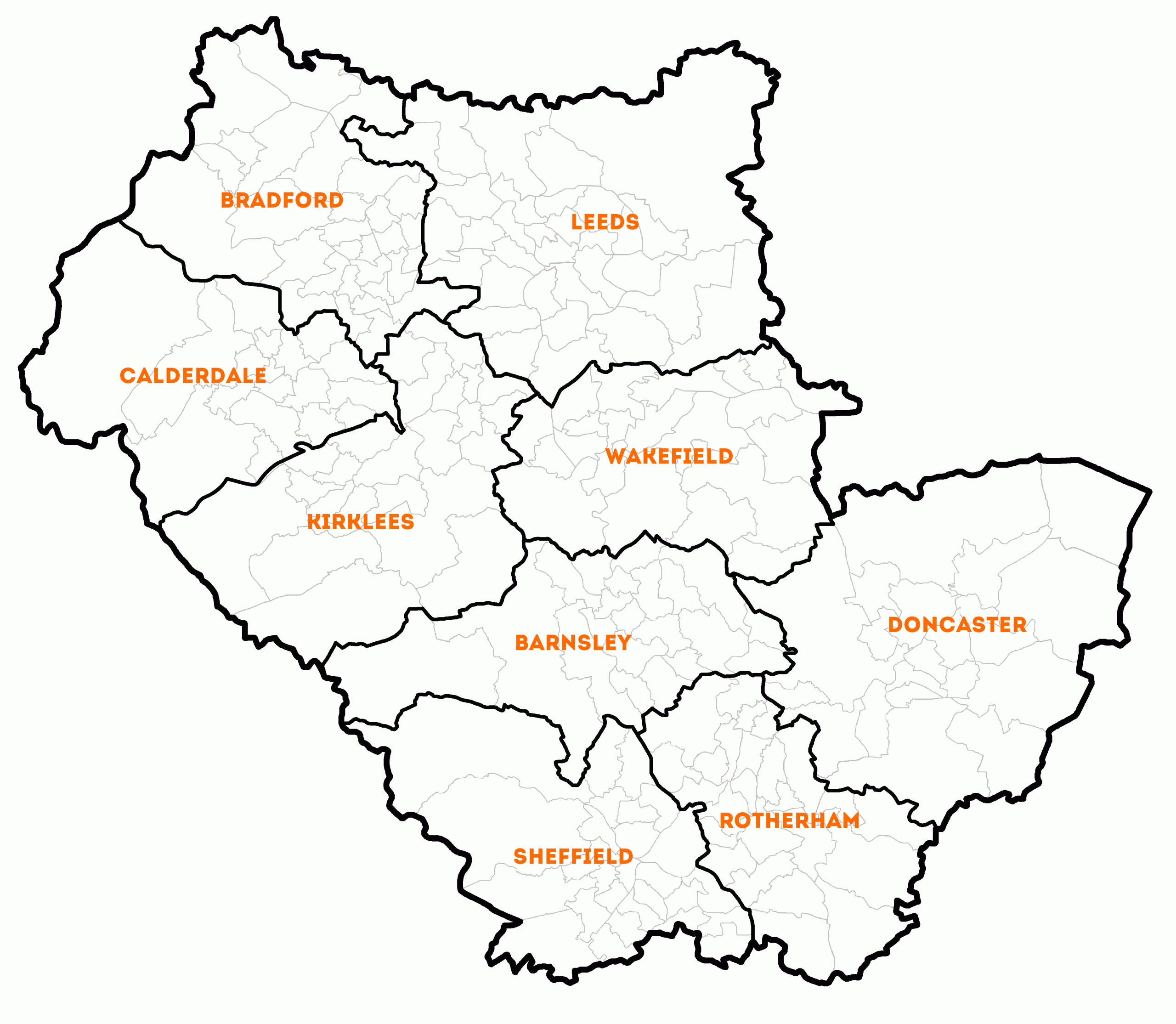
Council map of South and West Yorkshire
Last year, Reform gained Doncaster council control from Labour, who only just managed to hold on to the Mayoralty. It adjoins Barnsley, a very similar borough with a massive Labour majority heading towards election day…and maybe lacking one coming out of it.
Barnsley is surely the epitome of Labour Yorkshire: the heart of King Coal, where Miners Union sponsored candidates were guaranteed selection for Labour and went on to win with majorities weighed, not counted. Yet Reform has a decent chance of taking control – Labour has never before lost on these borough boundaries. If Reform can sweep Doncaster, they can sweep Barnsley.
Wakefield, immediately north of Barnsley, is also similar former mining territory. Labour won all but one seat in the 2024 council elections and have never lost power here. Wakefield, Barnsley, Rotherham, Doncaster: all former mining areas, all having struggled to find purpose when the pits closed, all massively Leave voting in the 2016 EU referendum. All trending away from Labour despite the party’s reprieve in 2024.
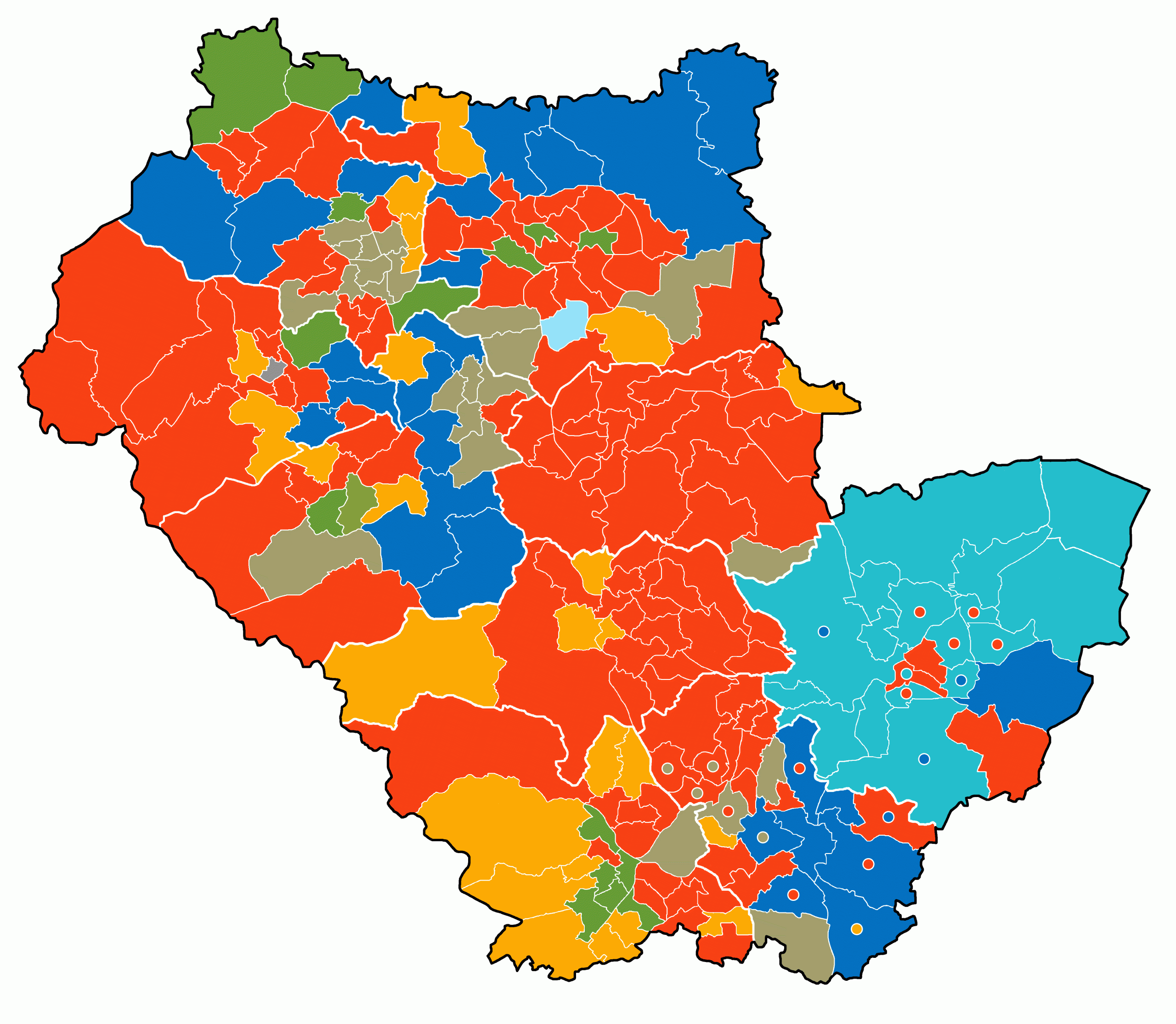
Ward map of South and West Yorkshire party control following the 2025 local elections
Sheffield, the only other South Yorkshire council up this year, is becoming ever-more hung as Labour sheds seats all over the place. Reform is a threat here, though far less of one than in Barnsley, and mostly in outer neighbourhoods: Stocksbridge, Ecclesfield, and in the south east of the city on the border with Derbyshire. The Greens control most of the city centre with its huge student population: and they did that long before they surged in the polls. They should be able to expand. The Liberal Democrats have long been strong in the semi-rural and suburban Hallam corner of Sheffield but gone are the days when they were strong enough (because they were then the only alternative to Labour) to win a majority.
So in Barnsley Labour faces two opponents, three in Sheffield. In these counties’ other two cities – Leeds and Bradford – it’s at least four and arguably five.
In Leeds, like Sheffield, the Greens are challenging in the centre of the city where the students plus a larger ethnically diverse electorate live. Reform will do very well in the council estates east of Leeds, and perhaps some of the further-flung rural parts within the city like Kippax, Ardsley and Morley. The Conservatives still have a presence here in the affluent suburbs along the river Wharfe. England’s only Social Democratic Party (SDP) ward is in Leeds: in Middleton Park. Reform may challenge there.
Bradford will be even more chaotic, because added to the mix are very strong Gaza Independents in the inner city wards. Labour won just ten of the thirty seats up in Bradford in 2024 thanks to that surge in high Muslim population wards. The Conservatives are strong in the fairly large Bradford hinterland that stretches to Bingley, Ilkley and Keighley.
The Greens have made gains from the Conservatives in some of this affluent outer band but may struggle there now the party is aggressively pursuing left-wing voters. While they have footholds around the edges of Bradford, the strength of the Independents in the inner wards may stop them making the sort of gains they could in Leeds. Reform has prospects, especially in the white working class south of the city and Queensbury. The Conservatives convincingly beat Reform earlier this year in a by-election in Worth Valley.
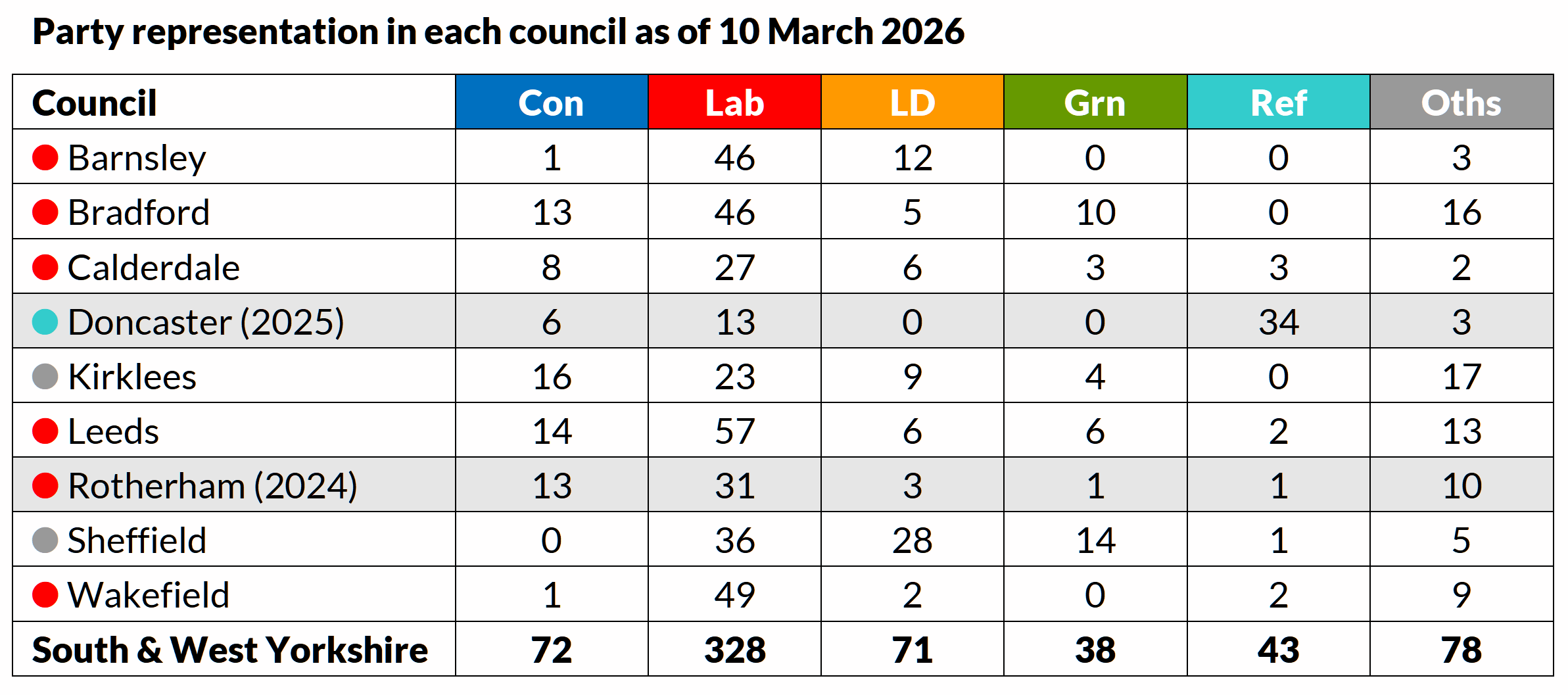
This leaves Calderdale and Kirklees. This pair are similar, comprising one or more large towns with rolling hills of West Yorkshire countryside in between.
Calderdale’s principal town is Halifax, one of those ethnically-divided northern towns with a Muslim community and a white majority that don’t really integrate. In recent years all across Britain, Labour’s vote share has fallen more in areas with high Muslim populations, whilst Reform’s vote has grown most in predominantly white geographies. Halifax is ringed to the east and south by much more affluent towns and villages like Brighouse, Rastrick and Elland. And then there are the largely unpopulated Pennine slopes with the isolated and Labour-voting towns of Hebden Bridge and Todmorden.
Labour clawed their way to a majority in Calderdale in 2019 and have held it since, but they’ll very likely lose power in May – with high odds of not even being the largest party there. Reform will be a threat in whiter Halifax, the satellite villages of Sowerby Bridge and Illingworth, plus the Calder Valley hinterland. George Galloway’s Workers Party won Park ward in 2024 with Labour’s vote down more than 40%, but unlike Bradford, that’s the only ward with a Muslim population large enough to influence the outcome here.
Kirklees is a much larger council that includes Dewsbury, Huddersfield and Batley – all with more electorally powerful Muslim neighbourhoods. A Gaza Independent won Dewsbury and Batley constituency in 2019 and there are at least six wards where the Muslim electorate is of sufficient size to impact the election, should there be the collective desire to vote one particular way. There are Lib Dem and Green patches across Kirklees while the Conservatives are strong in the Holme Valley, Mirfield and Denby Dale.
Like Calderdale, Labour battled to a rare majority in Kirklees in 2019 but hasn’t been able to hold it. Councillors have gone Independent over Gaza and Labour was beaten in five Batley and Dewsbury wards in 2024. In theory, Labour could drop from largest party to sixth in May – but that is the worst case scenario. Again, Kirklees isn’t the most promising ground for Reform but they will be a fierce challenger in the Conservative-held wards.
The only council in this bundle of seven Labour can’t lose this year is Leeds, and then only because just a third of its seats are up. Labour will “price in” losing Calderdale and Bradford and falling back further in Kirklees and Sheffield. But their election night representatives will struggle much harder to explain away the losses of Barnsley and Wakefield: heartlands they’ve never before lost.
It’s those sorts of losses that will reignite the threat to Keir Starmer’s leadership and also the argument rupturing the party: whether to focus more on the sort of voters Labour has shed to Reform in these “red wall” areas; or to prioritise the more progressive, liberal, affluent votes they will likely lose in London and Manchester and Newcastle; or to try to regain the votes of Muslim neighbourhoods which show no sign of returning to Labour any time soon.
 View our parent website (electionscentre.co.uk)