
Posted by Dr Hannah Bunting
7 April 2026Adam Gray gives his preview of the 2026 local elections in the West Midlands, where the Conservatives and Labour face challenges from both ends of the ideological spectrum.
2026 Local Elections Preview: West Midlands
By Adam Gray
The West Midlands conurbation is going to be a key area to watch this year for one main reason: voters have an unprecedented canvass to repaint the region in the colours they want. They could well be planning a major redecoration with pots of Reform light blue on order, some Green and a smattering of Independent olive.
Birmingham is up for election as the largest council in England, which nowadays only happens every four years. Four other councils – Coventry, Sandwell, Solihull and Walsall – have all-out elections following ward boundary changes, so there will be more seats up than at any time since the 1990s.
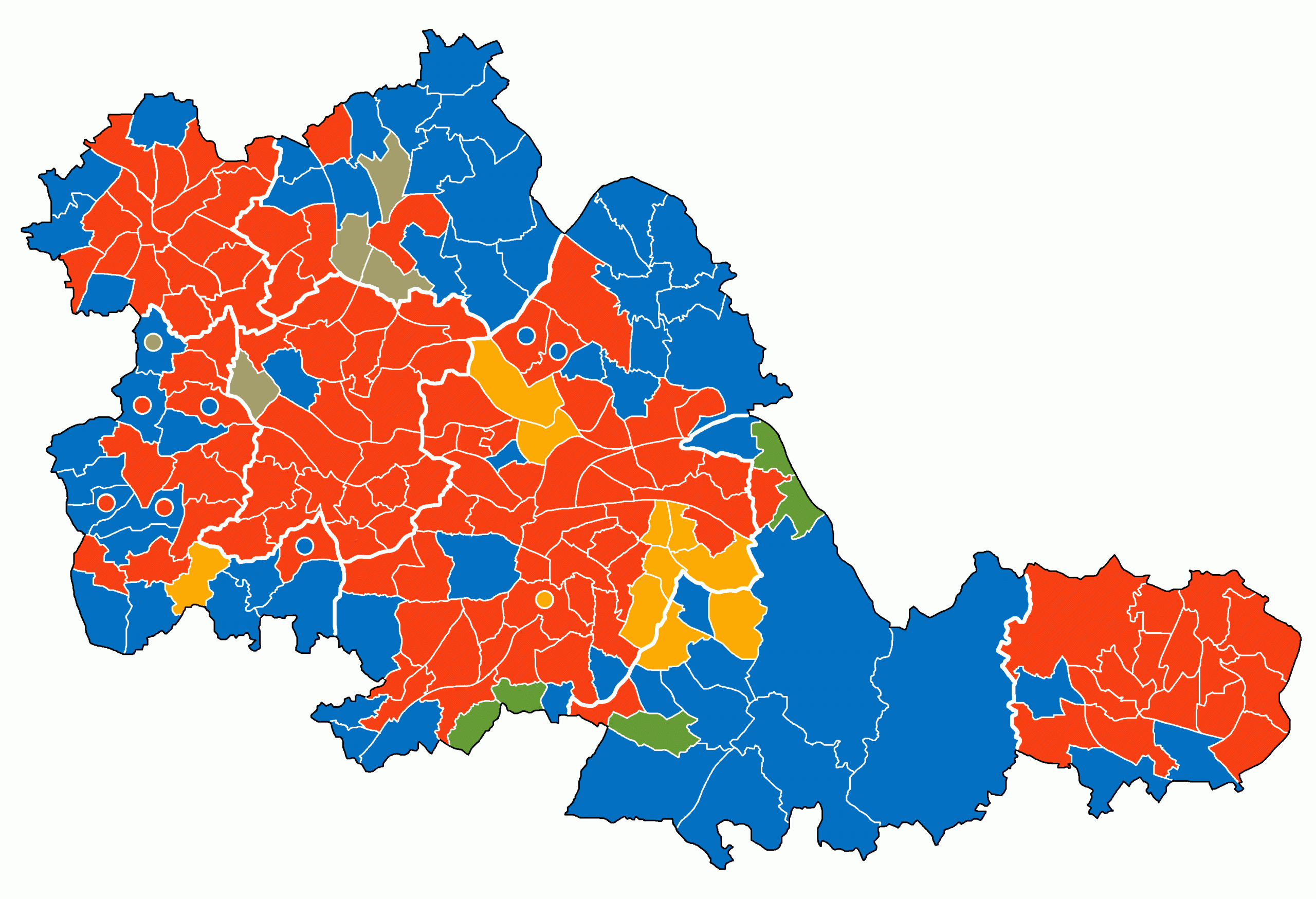
West Midlands wards by winning parties at the 2022 local elections
As the obvious Jupiter of all councils, Birmingham has an electorate of over 750,000 and some 99 councillors represent the diverse electoral battleground. Four years of headline-grabbing problems beset its Labour administration.
First the council lost an equal pay claim brought against it by women employees. This cost Birmingham up to £760m in compensation. Second, when they attempted to upgrade their financial IT systems it ended up costing over £140m – from an initial budget of just £19m.
These two problems effectively bankrupted the council, forcing it to seek a government bailout in 2023. Council Tax rose by 10% in 2024, 7.5% in 2025 and 4.99% this year, making the cost of the council the third big issue. And the fourth is the Birmingham Bin Strike – still not resolved and into its second year. Labour would be struggling mightily to hold onto Birmingham on those issues alone. But there are national dynamics too.
Birmingham was an epicentre of the backlash against Labour in neighbourhoods with large Muslim populations at the 2024 general election. Perry Barr elected one of the so-called ‘Gaza Independents’. Another came within 694 votes of winning Yardley, and Labour’s vote fell from over 82% to just 42% in Ladywood. George Galloway’s Workers Party was not far off winning Hodge Hill.
Since then the Independents have organised. If the general election is anything to go by, they will have a massive impact on the inner-city wards that seemed safe for Labour last time. The only question is: how many will stand?
The Independents may not just harm Labour. They may roadblock the Greens from the sort of surge in the inner city they managed in February’s Gorton & Denton by-election. And they may also prove a big problem for the Liberal Democrats, whose councillors mostly represent seats with fairly hefty Muslim populations in the centre-east.
The Greens will be looking at wards heavy with university students and Birmingham’s public sector employees who feel badly let down by Labour’s equal pay problem, the unresolved bin strike and the threat to their jobs because of the financial crisis. Look especially for Green gains just south of the city centre in the Hall Green and Selly Oak neighbourhoods.
Birmingham Conservatives tend to fare better in local elections than parliamentary contests. They also have a set of what should be safe wards in Sutton Coldfield in the north. But while they are the largest opposition group, they face a threat from Reform in the working class wards they hold in Erdington and Northfield – at opposite ends of the city. They may do alright in Edgbaston after years of ceding ground to Labour: voters who want to punish the incumbents know who they need to vote for to achieve that end.
Following defections and a by-election loss, Labour is only three seats from losing power. That fate is surely inevitable for Labour: the only question is how far down the voters will push them. It’s unlikely any other party can win Birmingham either. Perhaps the one thing worse than what’s come before may well be an ungovernable council where none can cobble together a working majority.

West Midlands councils map
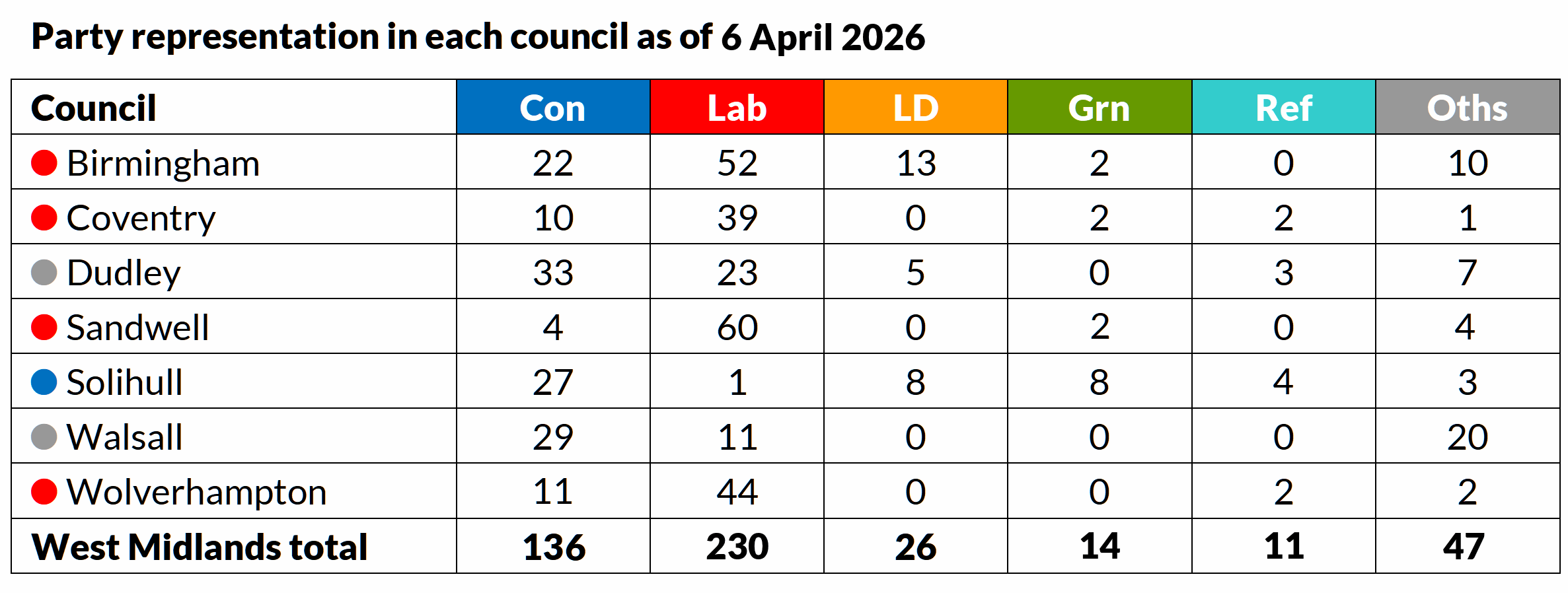
Reform is likely to be the big winner in the four councils west of Birmingham: Dudley, Sandwell, Walsall and Wolverhampton. They will likely win the majority of seats in Dudley and Walsall (taking control of Walsall council in that event), and could well do the same in Sandwell and Wolverhampton.
Labour has already faded badly in the recent past in Dudley and Walsall, so the Conservatives will take the bigger hit here from Reform. In Sandwell and Wolverhampton it is Labour that will take more damage.
Labour cannot lose power in Wolverhampton, even if they lose all vacancies being contested, because their majority is too large. But all seats are up in Sandwell and it has lots of Reform targets across Tipton, Wednesbury, West Bromwich, Rowley and Warley. There is also a big Muslim quarter in Sandwell that flows across the border with Birmingham into Soho, St Paul’s and Smethwick. If Gaza Independents stand here, Labour could not just be in danger of losing Sandwell for the first time in nearly fifty years, but of holding very few seats.
A large chunk of Labour’s council group in Walsall left the party over Gaza. This core of Independents may survive the Reform surge in part because they represent wards with large Muslim communities. But what’s left of the Labour group, along with a lot of Conservatives in places like Bloxwich, Brownhills, Willenhall and Darlaston, will likely be swept away.
To the east of Birmingham, Coventry is another where Labour is likely to struggle to keep power. Since the last elections in 2024, Coventry South MP Zarah Sultana has left Labour to found Your Party (YP) with Jeremy Corbyn. One of the city’s councillors has joined her and former Militant-backed MP Dave Nellist has organised TUSC. Independents or TUSC will likely be the vessels for YP to stand. And then there’s Coventry Citizens and the Greens: voters aren’t spoilt for choice!
Then there is atypical Solihull covering the expanse between Birmingham and Coventry. This is the most affluent part of the conurbation by a considerable distance, including the suburban commuter satellites of Shirley and Castle Bromwich, Meriden and Bickenhill. These are mainly safe Conservative areas or competitive with the Liberal Democrats or Greens. There is also the huge Chelmsley Wood council estate in the north. Labour used to win with three quarters of the vote here; today they have just one councillor left. The Greens have replaced them and it’s likely Reform will mount a very strong challenge. The Tories have a realistic chance of holding Solihull council, but it could be very close.
While 90% of wards in the West Midlands are being defended by either the Conservatives or Labour, we could be about to see the electoral map of the region being redrawn in multi-party colours.
 View our parent website (electionscentre.co.uk)