

Posted by Dr Hannah Bunting
30 April 2026Adam Gray gives his preview of Merseyside, a true-red region that might be about to break with Labour.
2026 Local elections preview: Merseyside
By Adam Gray
Nowadays it’s quite difficult to think of a region beyond London that’s deeper red than Merseyside – principally because of the fierce allegiance to Labour of the City of Liverpool. But Liverpool is not the only Labour redoubt on Merseyside. Until recently Knowsley, immediately east of the city, was effectively a one-party state. Sefton has swung heavily to Labour this past decade and its southern end, Bootle, produces overwhelming votes for the party. St Helens has been only slightly less fervent in its socialism while the river-adjacent side of Wirral is where Labour’s seats lie in that peninsula.
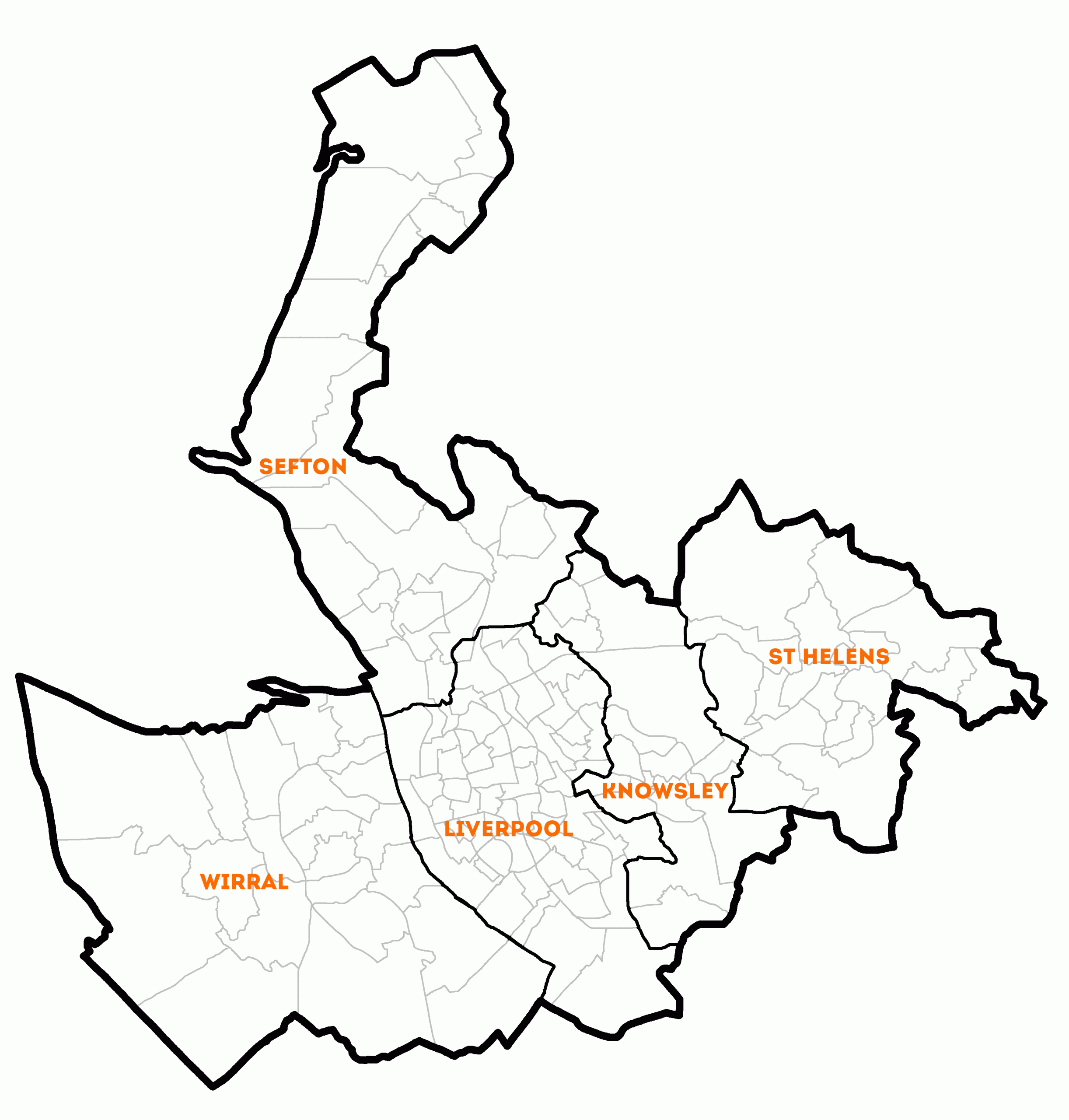
Council map of Merseyside
Merseyside’s five councils no longer vote together each year. Liverpool was moved to all-out elections in 2023. Wirral decided to follow suit and, like Liverpool, its next elections are in 2027.
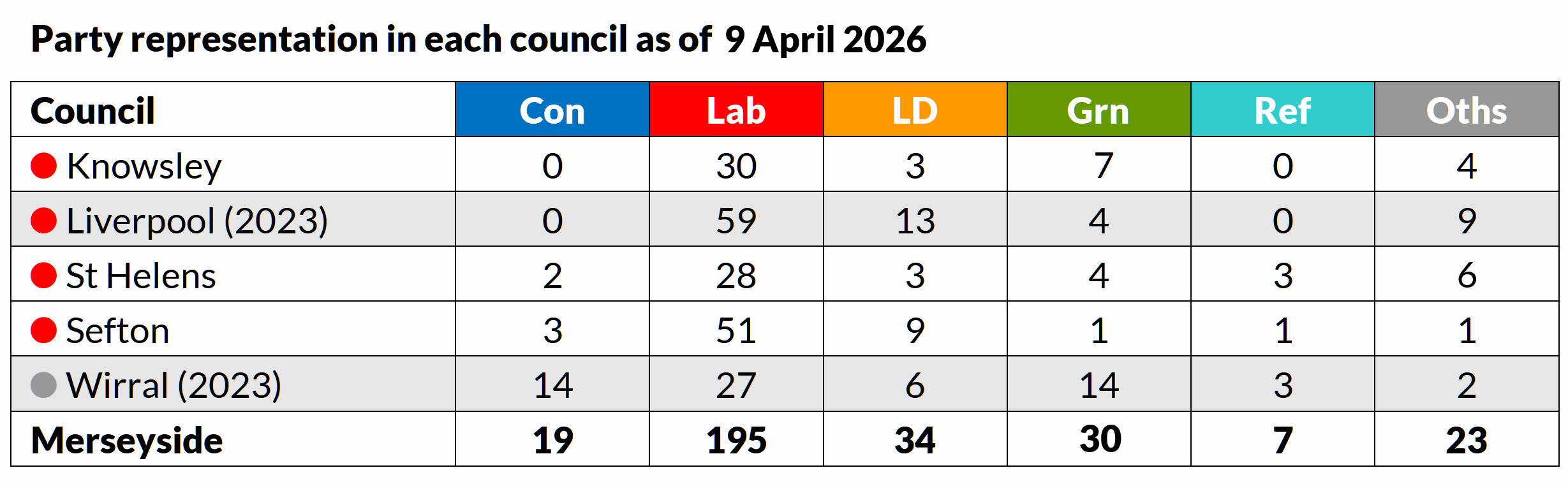
That leaves Knowsley, St Helens and Sefton. Looking at the scale of Labour’s majorities – ranging from 21 seats to 46 – there doesn’t seem much to discuss, does there? In fact there is.
St Helens is an “all-out” council that happens to elect this year. Because every seat is up, plus the fact that this town isn’t quite as red as the rest of Merseyside, there is an unusual amount of risk for Labour. Unlike almost everywhere else in the region, the beneficiary is going to be Reform UK.
St Helens borders Halton: the borough straddling the Mersey and based on the industrial towns of Widnes and Runcorn. Halton has a Reform MP following the Runcorn and Helsby by-election. We don’t have to speculate about Reform’s potency in these types of areas – there is an elected Reform MP nearby, supported in numbers by those who live in St Helens.
Merseyside epitomises the tactical problem the Labour government is struggling with: how to address the concerns of voters it has lost to Reform while retaining the votes of younger, more ethnically and socially diverse communities that are alienated by what Labour activists believe is a Reform-lite pitch. Sefton is where that tactical dilemma will manifest this year.

Proportional map of Merseyside ahead of the 2026 elections
Not that long ago, Sefton was a “well hung” council. The Lib Dems dominated the north around Southport. The Conservatives had a (faltering) grip on the centre around Crosby and Formby, and almost everyone voted Labour in Bootle – the town’s Linacre ward voted 86% Labour at the last elections in 2024; and polled well over 70% in six others. Today the Conservatives barely exist in Sefton while the Lib Dems are fighting a losing battle against Labour in Southport. There’s Labour’s problem in a nutshell: it has a Reform challenge to a yet unclear degree in poor, working class and socially conservative Bootle, extending into more affluent Crosby, but a progressive challenge in affluent, liberal Southport.
Labour could well fall between both stools: insufficiently progressive and insufficiently conservative at the same time. Hence the Liberal Democrats may well bask in a sort of Indian summer in Southport, pushing Labour out of the wards they have encroached upon up there; while facing a Reform threat in Bootle, Crosby and Maghull, and a potential Green threat, coming off a council by-election win in Liverpool’s Aigburth ward in March. The Greens will want to establish a bridgehead in Sefton – they have them in every other Merseyside council – but equally they are a more established threat and have the potential of far more gains elsewhere in the region.
Like St Helens, Sefton has all-out elections this year – but only because of (quite minor) ward boundary changes. It will return to elections by thirds in 2027. So, again, Labour is much more exposed than it usually would be, but unlike St Helens it is hard to see any party other than Labour leading the council after May 7th. There is the prospect that the council could return to no overall control but that would be the worst scenario for the party and would depend on lots of wards with massive Labour majorities all breaking for Reform in the south.
Finally, Knowsley. Although the proud electors of Huyton would fiercely dispute this, the town Harold Wilson used to represent is nowadays a seamless extension of Liverpool. Huyton is the largest neighbourhood in Knowsley; others being Kirkby in the north, Prescot and Whiston in the east and Halewood in the south. Labour was once so overwhelming a presence in Knowsley that the party routinely won every seat up each year, its opponents often so weak they couldn’t even field candidates.
That has changed quite recently. The Lib Dems have regained a foothold in Prescot, there are competitive independents in Kirkby and Halewood, and the Greens have gradually built themselves into contention in Whiston and Huyton. That’s why Labour today “only” has a 2:1 majority on the council – a far cry from the near-monopolies they used to enjoy. And that position was reached before the Greens became a party of national salience: they are fielding 13 candidates for 16 vacancies so there will suddenly be a lot of Labour councillors representing places they’ve never really had to fight to win before. Now they will.
Knowsley does not look especially Green-leaning. Like St Helens it is overwhelming white and socially conservative and, like Bootle, Kirkby in particular is exceptionally poor. So there are opportunities for Reform as well as the Greens, and where neither are particularly strong perhaps independents will collect a load of protest votes.
If that wave of protest is of Poseidon Adventure scale – and it could well be – Labour might lose power in Knowsley for the first time ever. Their majority is fifteen so they can afford no more than seven losses from the ten seats they are defending. The odds are on Labour just about surviving: cueing a battle royale next year.
But Labour won’t emerge unscathed. Of the three councils Labour is defending it is likely to lose one and, in its very worst scenario, could lose all three. In turn, that will compel Labour to invest huge resources to hold onto Liverpool next year and trying to undo this year’s defeats in the surrounding boroughs. If Merseyside is a key battleground for Labour, something is going very, very wrong for the party.
 View our parent website (electionscentre.co.uk)